Telehealth in Rural Communities: Access and Adoption Requirements
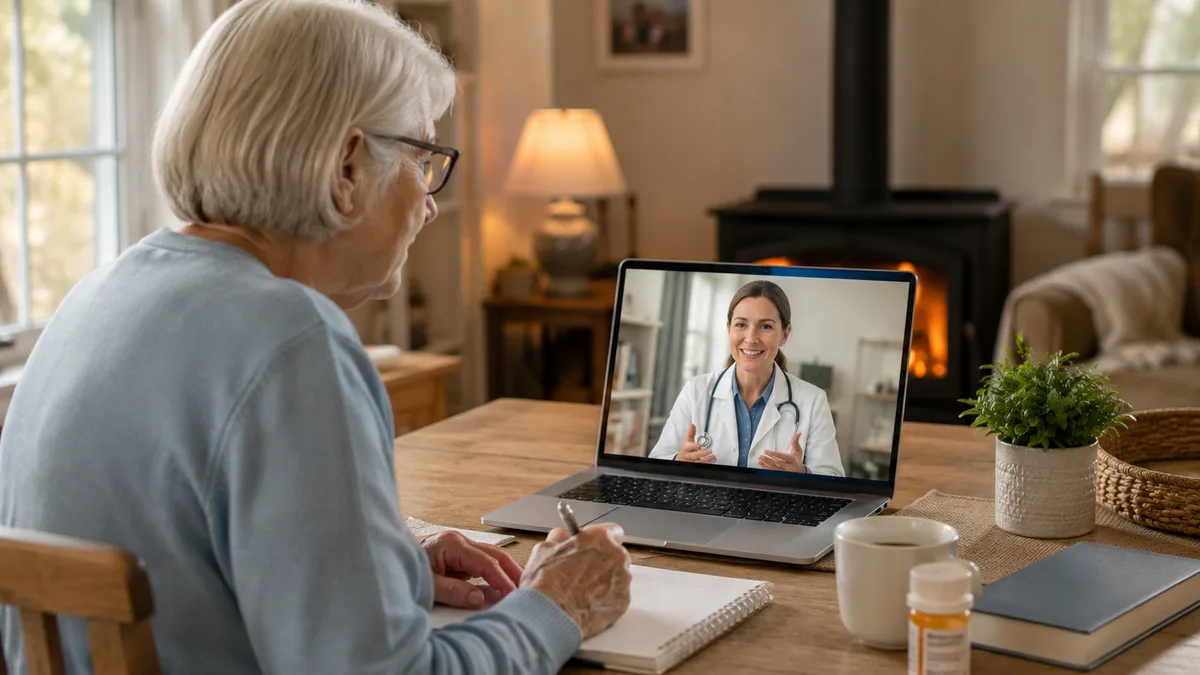
Rural telehealth succeeds when the organization designs around the patient’s location, connectivity, device access, clinical needs, and ability to complete the encounter. Video capability alone does not solve the travel and provider shortages that shape rural care.
The Government Accountability Office identifies fewer providers, longer travel distances, fewer transportation options, and less broadband as recurring rural access barriers. A telehealth program should address the parts of that problem that remote care can reasonably change.
Start with the trips patients are making
Map the journeys required for primary care, specialty consultation, medication review, behavioral health, rehabilitation follow-up, post-discharge care, and chronic-condition management. Record distance, travel time, transportation source, caregiver involvement, missed appointments, and referral delays.
Clinical leaders should then identify which interactions can occur remotely. A discussion-based follow-up may fit telehealth. Imaging, procedures, many physical examinations, and emergency evaluation still require in-person services.
Verify connectivity at the patient level
A county-level broadband map cannot confirm that a patient has reliable service inside the home. Test the actual location when possible. Review speed, stability, data limits, Wi-Fi reach, cellular backup, power interruptions, and affordability.
Provide alternatives. A patient may use telephone, a supported community site, a clinic spoke location, a tablet, or a television-based endpoint. The right access method depends on the patient and the service.
Reduce digital setup
Account creation, passwords, downloads, updates, camera permissions, microphone permissions, and forgotten credentials create friction. Older adults and caregivers may abandon the visit before the clinician joins.
Organizations should test the full process from invitation through documentation. Count the steps. Provide a pre-visit check and a live support number. Keep a backup plan for failed video.
Independa describes television-based video and health services designed for people who may not use computers or tablets comfortably. That approach may reduce some device barriers for selected rural older adults, provided the home has compatible equipment and adequate connectivity.
Define clinical responsibility
Telehealth programs need written rules for patient identification, location confirmation, consent, privacy, documentation, prescribing, emergencies, referrals, and escalation to in-person care.
The clinician should know the patient’s physical location at the beginning of the encounter. The organization should know which emergency resources serve that location. Rural response times and long distances make this step important.
Train patients and staff
Training should use the real device and a realistic appointment. Patients should practice answering, adjusting audio, positioning the camera, and ending the session. Caregivers need permission rules and clear boundaries.
Staff training should cover scheduling, technical triage, clinical escalation, privacy, documentation, and downtime procedures. A single project champion cannot support an enterprise program indefinitely.
Measure access, reliability, and follow-through
Useful measures include completed remote visits, failed connections, converted telephone visits, trips avoided, time to specialty consultation, patient support requests, referral completion, and follow-up completion. Document the baseline first.
Separate technical success from clinical success. A completed video call does not establish that the patient received the right service or completed the next step.
Build a hybrid model
Rural telehealth works best as part of a hybrid system. Remote access can reduce selected trips and connect patients with distant expertise. Local clinics, hospitals, pharmacies, emergency services, laboratories, imaging providers, home health teams, senior living staff, and family caregivers still play critical roles.
The program should make transitions between remote and in-person care clear. Patients need to know whom to call, where to go, and what to do when symptoms change.
A reliable rural telehealth model reduces avoidable distance. It also respects the limits of remote care.
Procurement questions for rural telehealth
Ask vendors to identify the minimum bandwidth, supported browsers or devices, camera requirements, identity controls, accessibility functions, and support hours. Confirm whether software updates occur automatically and whether a failed update can block an appointment.
Review data handling. Document where video, messages, recordings, and clinical information are stored. Confirm whether sessions are recorded and under what circumstances. Ask how accounts are created and removed, how audit logs are accessed, and which subcontractors participate.
Request a rural implementation example that resembles the intended population. Examine patient age, geography, connectivity, service type, staffing, and support. A deployment in a well-connected urban specialty practice may provide limited evidence for a remote rural population.
Adoption should be designed, not assumed
Invite patients and caregivers into testing before launch. Observe a complete scheduled encounter. Record setup time, assistance required, audio or video problems, and points of confusion. Use those findings to change instructions and workflow.
Adoption can decline after the initial rollout. Review unused accounts, repeated technical failures, missed appointments, and requests to switch channels. A patient who chooses telephone after several failed video attempts is giving the program useful design information.
Rural telehealth should offer a practical route to care. It should not make the patient responsible for solving the organization’s technology problems.
Financial and operational planning
Rural telehealth budgets should include more than software licenses. Plan for devices, cameras, connectivity assistance, installation, replacement, training, patient outreach, technical support, interpreter services, security review, integration work, and staff time. A low subscription price can still produce a costly program when setup and support remain manual.
Define the expected service volume and staffing model before procurement. Estimate how many appointments can occur remotely, how many patients will need assisted setup, and how many technical contacts each visit may generate. Use a conservative adoption assumption for the first year.
Contracts should identify uptime commitments, support response, data ownership, termination assistance, equipment return, and access to records. Rural organizations also need a plan for prolonged internet or power disruption.
Patient trust and communication
Explain why a remote option is being offered and what the patient can expect. Patients may worry that virtual care is being used to deny an in-person visit. State clearly that clinical need and patient circumstances determine the appropriate channel.
Use local partners where possible. A trusted clinic, senior living community, home health nurse, pharmacist, or community organization can help patients understand and adopt the service. Trust cannot be added through a software setting.
Collect feedback after the first encounter and after several months. Ask about setup, privacy, communication quality, confidence, and whether the service reduced a meaningful burden. Use responses to improve the program rather than as a stand-alone outcome claim.
About Independa
Founded in 2009 and headquartered in San Diego, Independa, Inc. develops technology designed to help older adults stay connected, engaged, informed, and supported across senior living communities and at home. At the center of the company’s offering is the Independa Health Hub®, a health, wellness, engagement, and care platform that can be accessed through familiar screens, including televisions, tablets, computers, and phones.
Independa’s approach centers on making digital health and engagement services easier to access for older adults, including those who may be less comfortable using traditional computers or mobile applications. Through the Independa Health Hub®, users can access services such as video communication, social connection, family communication, wellness resources, telehealth, and other health-related tools. The platform is HIPAA-compliant and is available through supported LG and Sony smart TVs, DISH Network set-top boxes, computers, and tablets.
For senior living organizations, Independa extends beyond resident-facing communication. Its platform supports a range of community and enterprise functions, including resident and family engagement, digital signage, community calendars, dining menus, surveys, broadcast messages, work orders, and information delivered directly through resident televisions. This gives operators a way to bring communication, engagement, wellness, and selected care services into a coordinated technology environment while reaching residents through screens they already know how to use.
Independa also serves organizations across home care, home health, remote care, and other healthcare delivery models. Its technology can support virtual interaction between older adults, caregivers, family members, and healthcare professionals, including access to telehealth services and remote healthcare engagement.
The company describes its mission in practical terms: making health, wellness, communication, and care easier to access without requiring older adults to adapt to an entirely new technology environment. By bringing services to the television and other familiar devices, Independa is designed to support aging in place, resident engagement, family connection, remote care, and the broader goal of helping older adults remain more independent and connected.
Frequently Asked Questions
What makes rural telehealth different?
Rural programs must account for longer travel, fewer local providers, limited transportation, variable broadband, smaller clinical teams, and fewer backup options when a remote encounter identifies a need for in-person care.
Which rural healthcare visits can use telehealth?
Suitability depends on clinical judgment. Follow-up discussions, behavioral health, medication review, education, and some specialty consultations may fit remote care, while procedures and many examinations require in-person services.
How should a program handle failed video?
It should have a tested backup method, such as telephone or rescheduling, plus clear rules for urgent clinical concerns and technical support.
Should rural telehealth programs use one device type?
A multi-channel approach is usually more inclusive. Patients may need telephone, tablet, computer, television, or a supported community access point.
What should be measured?
Track completed visits, failed connections, travel avoided, support requests, time to consultation, follow-up completion, and transitions to in-person care.