Rural Health Technology: Reducing the Distance Between Patients and Care
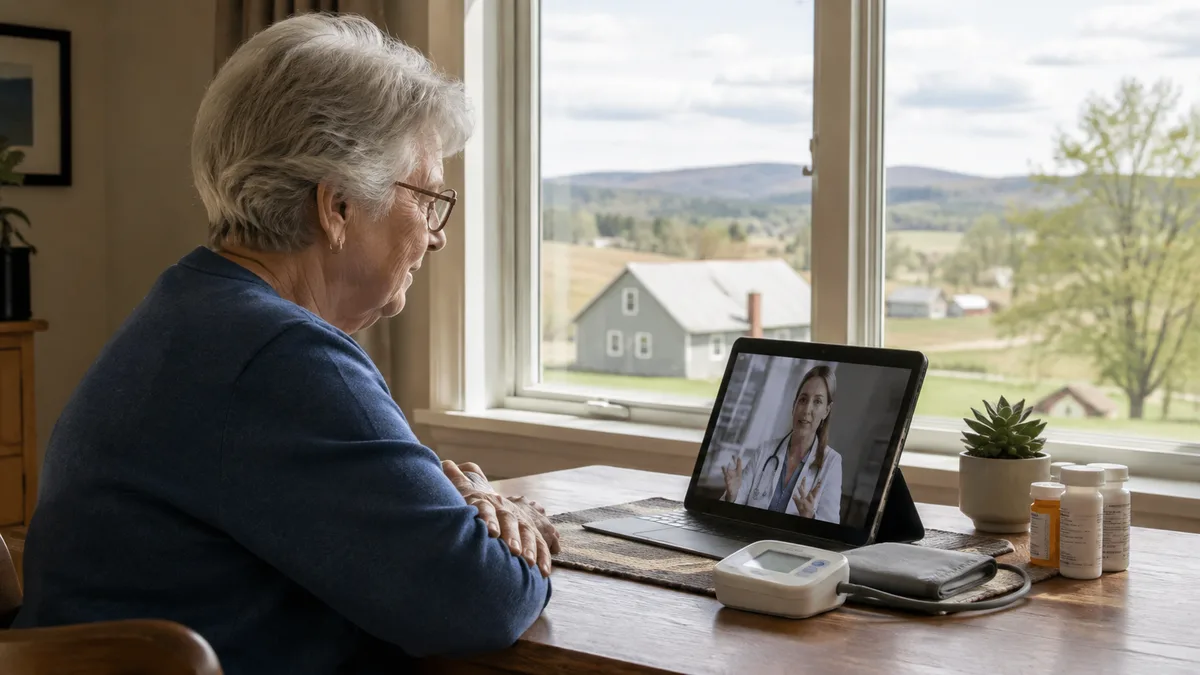
Rural health access is shaped by distance. Patients may live far from primary care, specialists, hospitals, pharmacies, diagnostic services, rehabilitation, behavioral health care, and other services that urban patients can reach more easily. A missed appointment in a metropolitan area may involve a short reschedule. In a rural community, the same missed appointment can represent hours of travel, lost wages, caregiver coordination, fuel expense, weather exposure, and another long wait for care.
Federal sources consistently identify the same structural barriers. The U.S. Government Accountability Office reports that rural residents face fewer healthcare providers, longer travel distances, fewer transportation options, and less broadband access. The Centers for Disease Control and Prevention states that rural residents tend to be older and sicker, have less access to healthcare, and experience higher rates of several chronic-disease risk factors. These conditions make rural healthcare access a service-delivery problem, an infrastructure problem, and a patient-experience problem.
Technology cannot create a local cardiologist, reopen a hospital, or supply a missing ambulance crew. It can reduce selected forms of distance. The most useful rural health technologies connect patients to clinicians, education, monitoring, reminders, family support, and follow-up without requiring every interaction to begin with a long trip.
What rural patients experience when care is far away
The phrase “lack of access” can sound abstract. For patients, it is practical and immediate.
A routine primary-care visit may require a long drive. Specialty care can require travel to a regional center. Public transportation may be unavailable. A spouse, adult child, neighbor, or community organization may need to provide the ride. The patient may postpone care because the trip is difficult to organize or because travel costs compete with groceries, utilities, medications, or other expenses.
Travel also affects clinical timing. A patient may delay reporting a change because the nearest appointment feels too burdensome. A caregiver may wait until symptoms are severe enough to justify the trip. Follow-up after a hospital discharge can become inconsistent when the patient must return to a distant facility for a brief check. Behavioral health and rehabilitation services can be especially difficult to sustain when care requires repeated travel.
The consequences vary by patient and condition. The operational lesson is consistent: rural access strategies should reduce avoidable travel while preserving clear routes to in-person care when a physical examination, procedure, imaging study, emergency evaluation, or hands-on treatment is required.
Distance is only one part of the access problem
Geography interacts with workforce shortages. A nearby facility may have limited appointment availability, reduced service lines, or no relevant specialist. Provider turnover can interrupt continuity. Rural hospitals and clinics often work with smaller teams and less redundancy, which makes vacancies harder to absorb.
Transportation is another constraint. Some rural residents do not drive. Others limit driving at night, in bad weather, or over long distances. A patient may be physically able to attend an appointment but unable to arrange the trip.
Broadband and cellular coverage can limit virtual care. Even when service is technically available, affordability, speed, reliability, data limits, device ownership, passwords, application downloads, and digital skills can block use. A rural health program that assumes every patient owns and confidently operates a current smartphone will exclude part of the population it intends to reach.
Rural older adults may face several barriers at once. The patient may live alone, manage multiple chronic conditions, rely on an adult child who lives elsewhere, and use television more comfortably than a tablet. Technology decisions should be based on this real operating environment.
What technology can address
A useful rural health technology strategy begins by separating interactions that require physical presence from interactions that can occur remotely.
Virtual visits can reduce travel for selected consultations, follow-up conversations, medication discussions, behavioral health encounters, care planning, and education. Suitability depends on clinical judgment, licensure, privacy, connectivity, patient preference, and current payer rules.
Remote patient monitoring can collect selected physiologic data outside the clinic when a care program has defined devices, consent, data review, alert thresholds, documentation, escalation, and clinical responsibility. Monitoring should connect to a real workflow. A stream of data without an assigned reviewer does not improve access.
Asynchronous communication can help patients send information or receive instructions without coordinating a live appointment. Secure messages, surveys, symptom check-ins, and recorded education can support continuity when used within the organization’s clinical and privacy policies.
Digital education can deliver condition-specific material, discharge instructions, exercise guidance, and preventive-care information. Content should match the patient’s care plan, reading level, language, sensory needs, and local resources.
Reminders can support appointments, medications, measurements, surveys, and care-plan tasks. The system should make missed responses visible to the appropriate team when follow-up is required.
Family and caregiver communication can help people who live at a distance participate in care planning and routine support, subject to patient permission and privacy rules.
The access point matters
Many rural health programs focus on the service and underweight the device through which the patient must reach it. A technically capable application has limited value when the patient cannot install it, remember the password, navigate the interface, or read the screen.
Organizations should inventory the devices patients already use. Smartphones and tablets will fit some populations. Telephone remains important. Community access points can help patients who lack broadband at home. Television can be relevant for older adults who are comfortable using a remote and benefit from a larger screen.
Independa publicly describes a TV-based health and engagement platform that can support remote social and clinical engagement, education, telehealth-related services, health-device integration, video communication, reminders, and other services. Its organizational materials specifically identify rural health as a use case and describe television as a familiar endpoint for people who cannot be counted on to use computers or tablets.
That positioning is relevant to rural programs serving older adults. It does not remove the need to verify local broadband, television compatibility, hardware requirements, service availability, clinical workflow, privacy controls, and support responsibilities.
Rural telehealth requires a complete operating model
Telehealth is often discussed as a video call. A dependable program includes much more.
The organization must define which patients and encounters are appropriate. Scheduling staff need a process for offering and preparing the visit. Patients need clear instructions and a way to test access. Clinicians need documentation standards, consent procedures, identity verification, escalation rules, and a backup method when video fails. Technical support must cover the hours when visits occur.
Clinical leaders should define what happens when the remote encounter reveals a need for hands-on care. The patient may require a same-day clinic visit, emergency response, laboratory testing, imaging, or referral. Rural distance makes escalation planning essential.
Payer policy and professional requirements change. Organizations should verify federal and state rules, licensure, prescribing requirements, eligible services, originating-site requirements when applicable, and documentation standards immediately before implementation and publication of reimbursement guidance.
Remote monitoring must produce action
Remote monitoring can reduce the need for some routine travel and give care teams information between visits. It also creates operational obligations.
For every measurement, ask who receives it, how frequently it is reviewed, what range requires attention, who contacts the patient, what happens after hours, how the response is documented, and when the patient is directed to in-person or emergency care.
Device logistics matter in rural areas. Programs need a method for shipment, setup, replacement, connectivity, cleaning, return, and troubleshooting. A device that cannot connect from the patient’s home creates another access failure.
Patient burden matters too. Requiring several devices, frequent charging, separate applications, and complex pairing may reduce adherence. Procurement teams should test the complete patient routine rather than evaluating each device in isolation.
Technology should connect rural patients between encounters
The period between visits is often where access problems become visible. A patient may misunderstand instructions, stop a medication because of side effects, miss a measurement, become socially isolated, or notice a symptom that does not yet feel serious enough to justify a long trip.
A connected-care model gives the patient several appropriate ways to remain in contact. It may combine scheduled video visits, surveys, reminders, educational content, monitoring, family connection, and a clear call path. The design should match the care program and should never imply continuous clinical surveillance unless continuous surveillance is actually provided.
For older adults, social connection can support the broader care experience. Family messages, video contact, wellness content, and routine check-ins can help maintain engagement. Clinical and social functions should have distinct permissions, response expectations, and documentation rules.
What senior living organizations can contribute
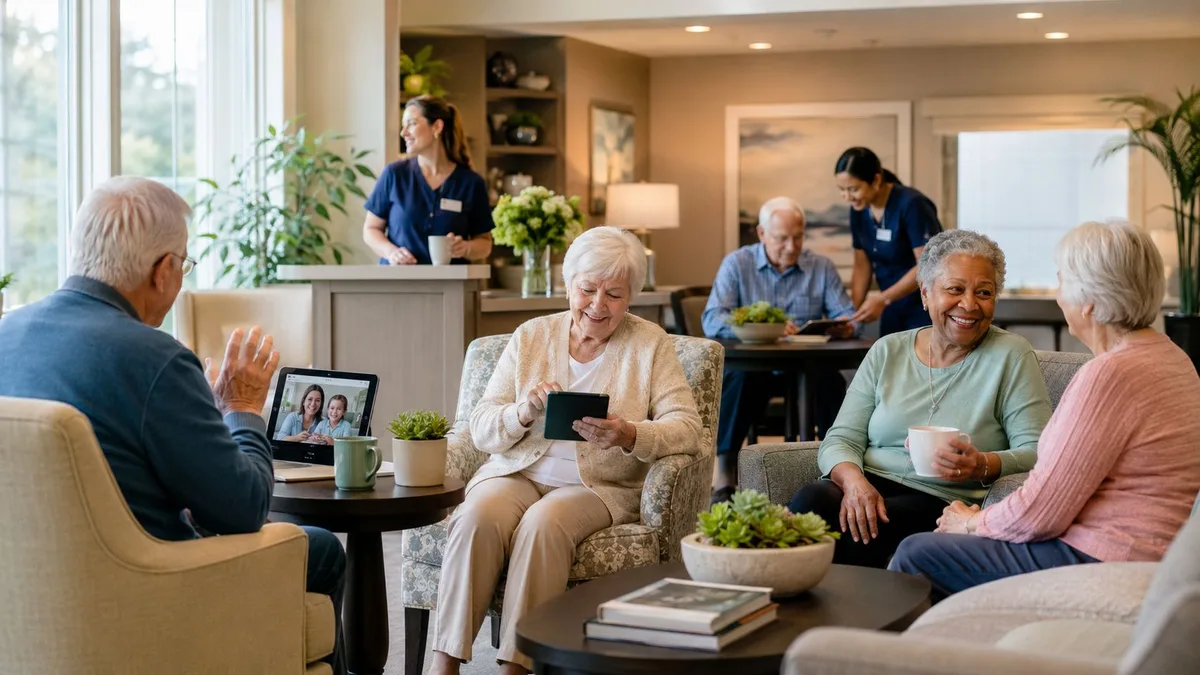
Senior living communities in rural areas can become practical access points for residents who would otherwise travel long distances. They may provide a private space, reliable connectivity, a supported device, scheduling assistance, or coordination with outside clinicians. The arrangement must define the community’s role carefully.
Community staff should know whether they are providing technical help, appointment coordination, clinical assistance, or none of those functions. Licensure, scope of practice, privacy, resident consent, emergency response, and documentation responsibilities must be addressed.
Enterprise operators should also consider portfolio variation. A technology model that works in a suburban community with strong broadband may fail at a rural property. Site assessment should examine bandwidth, Wi-Fi coverage, cellular backup, power reliability, television infrastructure, private spaces, and local support capacity.
How CEOs and COOs should evaluate rural health technology
Start with the patient journey. Map the distance, time, cost, and assistance required for primary care, specialty care, diagnostics, pharmacy access, rehabilitation, behavioral health, and post-discharge follow-up.
Identify the encounters that could reasonably occur remotely. Obtain clinical review. Do not base this decision on software capability alone.
Segment patients by device access, connectivity, comfort, sensory needs, language, caregiver support, and clinical complexity. A single access method will rarely serve everyone.
Review implementation responsibilities. Ask who supplies equipment, installs it, tests connectivity, trains patients, supports caregivers, maintains devices, manages accounts, and removes access when participation ends.
Review the clinical operating model. Confirm who monitors data, responds to alerts, handles missed check-ins, escalates symptoms, documents actions, and provides after-hours coverage.
Review privacy and security. Confirm data flows, hosting, encryption, permissions, identity verification, audit logs, subcontractors, retention, incident response, and contractual responsibilities.
Review evidence with precision. Ask which outcomes were measured, in what population, over what period, against which baseline, and under what implementation conditions. Do not apply a result from one care model to a different rural population without justification.
A practical rural access scorecard
Executives can organize evaluation around six questions.
Reach: Can the program serve patients who live far from care and patients who do not use conventional digital tools comfortably?
Reliability: Does the technology work under the actual broadband, cellular, power, and device conditions of the target communities?
Workflow: Are scheduling, consent, documentation, monitoring, escalation, and support responsibilities explicit?
Accessibility: Can patients with vision, hearing, dexterity, cognitive, language, or literacy needs use the endpoint?
Continuity: Does the program support patients between encounters rather than offering a stand-alone video visit?
Evidence: Can the organization measure travel avoided, completed follow-up, response time, patient use, technical failures, and other defined outcomes without overstating causation?
Metrics that reflect rural access
The best measures begin with a documented baseline. Possible measures include average travel distance for targeted encounters, patient travel time, appointment completion, no-show rates, time from referral to consultation, time from discharge to follow-up, successful remote-session rate, technical failure rate, patient support requests, monitoring completion, escalation response time, and percentage of patients with an accessible endpoint.
Travel avoided should be calculated conservatively. A virtual encounter should count only when it replaces a trip that would otherwise have occurred. Patient satisfaction can provide useful context, but it does not establish clinical effectiveness by itself.
Equity measures are also important. Review adoption by age, language, disability, geography, connectivity level, and device type where lawful and appropriate. A program can show strong average use while leaving the hardest-to-reach patients behind.
Where Independa may fit
Independa’s public materials describe an enterprise, television-based remote engagement, education, and care platform. The company identifies rural health, home health, home care, PACE, managed care, remote monitoring, and other organizational use cases. It describes simplified video, education, health-device integration, surveys, reminders, social connection, and access through televisions, computers, or tablets.
For a rural health organization, the relevant question is whether this approach matches the target patient group and the care workflow. A television endpoint may help reach older adults who are less comfortable with computers or tablets. The complete evaluation should verify connectivity, supported devices, clinical integrations, available partner services, security, implementation, support, and the precise responsibilities of Independa, the healthcare organization, and any third party.
About Independa
Founded in 2009 and headquartered in San Diego, Independa, Inc. develops technology designed to help older adults stay connected, engaged, informed, and supported across senior living communities and at home. At the center of the company’s offering is the Independa Health Hub®, a health, wellness, engagement, and care platform that can be accessed through familiar screens, including televisions, tablets, computers, and phones.
Independa’s approach centers on making digital health and engagement services easier to access for older adults, including those who may be less comfortable using traditional computers or mobile applications. Through the Independa Health Hub®, users can access services such as video communication, social connection, family communication, wellness resources, telehealth, and other health-related tools. The platform is HIPAA-compliant and is available through supported LG and Sony smart TVs, DISH Network set-top boxes, computers, and tablets.
For senior living organizations, Independa extends beyond resident-facing communication. Its platform supports a range of community and enterprise functions, including resident and family engagement, digital signage, community calendars, dining menus, surveys, broadcast messages, work orders, and information delivered directly through resident televisions. This gives operators a way to bring communication, engagement, wellness, and selected care services into a coordinated technology environment while reaching residents through screens they already know how to use.
Independa also serves organizations across home care, home health, remote care, and other healthcare delivery models. Its technology can support virtual interaction between older adults, caregivers, family members, and healthcare professionals, including access to telehealth services and remote healthcare engagement.
The company describes its mission in practical terms: making health, wellness, communication, and care easier to access without requiring older adults to adapt to an entirely new technology environment. By bringing services to the television and other familiar devices, Independa is designed to support aging in place, resident engagement, family connection, remote care, and the broader goal of helping older adults remain more independent and connected.
Conclusion
Rural health technology should reduce the practical burden of distance while protecting clinical quality and patient choice. The strongest programs begin with the barriers patients face, then select appropriate services, endpoints, workflows, and measures.
Telehealth, remote monitoring, education, reminders, and caregiver connection can improve access to selected interactions. They work best as parts of a coordinated care model. Rural patients still need dependable routes to local and regional in-person care.
For senior living CEOs, COOs, health systems, health plans, and community partners, the procurement question is direct: can this technology reach the intended patients under real rural conditions and connect them to responsible care? The answer should be demonstrated through workflow, testing, and measurable results.
Frequently Asked Questions
What healthcare access problems do rural patients face?
Common barriers include fewer providers, longer travel distances, limited transportation, reduced access to specialists, hospital closures, broadband limitations, cost, and difficulty arranging repeated trips.
How can technology improve rural healthcare access?
Technology can support virtual visits, remote monitoring, education, reminders, secure communication, caregiver involvement, and follow-up between in-person encounters.
Can telehealth replace in-person rural healthcare?
Telehealth can replace selected interactions when clinically appropriate. Physical examinations, procedures, imaging, emergency evaluation, and many treatments still require in-person care.
Why is broadband important for rural telehealth?
Reliable connectivity affects video quality, data transmission, device setup, and access to support. Programs need alternatives for patients whose home service is unavailable or unreliable.
How can television support rural older adults?
A television can provide a familiar, large-screen endpoint for video, education, reminders, messages, and selected health services when the platform, connectivity, privacy, and workflow support those uses.
What should executives measure in a rural health technology program?
Measures can include travel avoided, appointment completion, technical failure, time to consultation, follow-up completion, patient support needs, monitoring adherence, response time, and access by population segment.