How Remote Engagement Supports Home Health and Value-Based Care Programs
Value-based care programs need dependable contact with patients outside the clinic. Home health agencies face the same requirement during an episode of care. Remote engagement provides channels for communication, education, telehealth access, and monitoring between in-person encounters.
The term covers several different functions. Leaders should separate them during planning.
Communication and education
Remote engagement can deliver appointment reminders, care-plan education, wellness information, and instructions approved by the responsible provider. Patients can revisit material at home, and authorized caregivers can participate when consent permits.
Content should be assigned and governed. A generic library does not confirm that a patient received the correct information or understood it.
Telehealth access
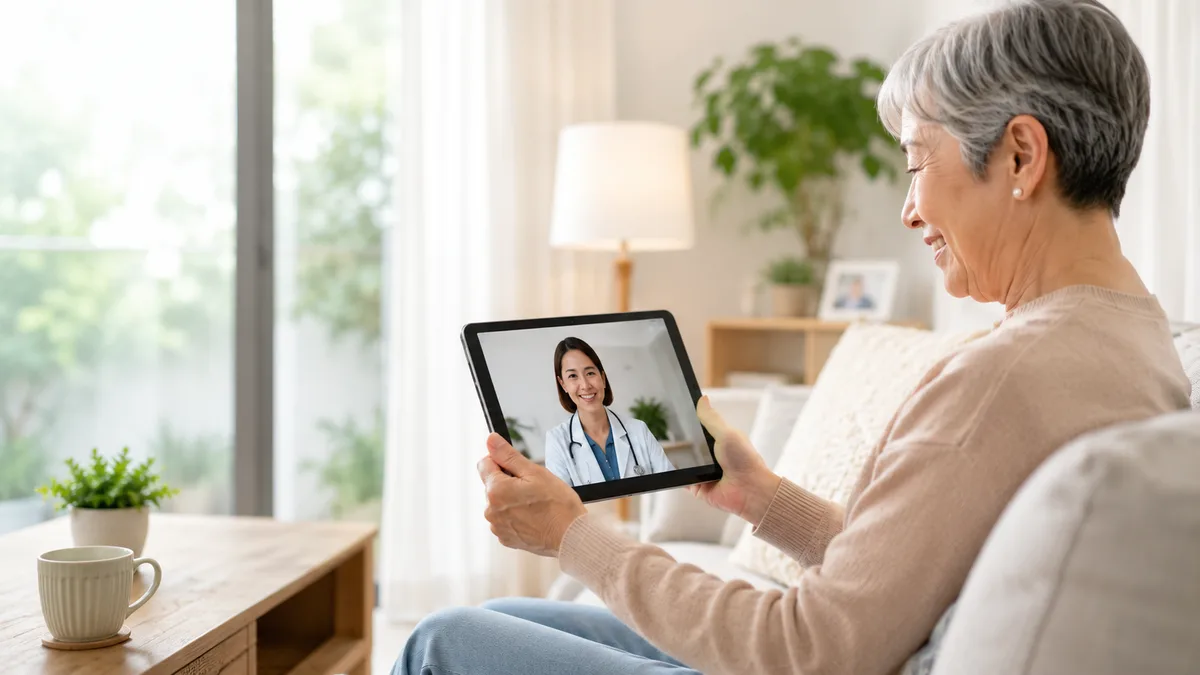
Telehealth allows a patient and qualified provider to connect from different locations. Current Medicare rules and flexibilities should be checked through official sources before program launch because coverage and operational requirements can change.
A platform can make the connection easier, especially when it works on a device the patient already uses. Independa publicly describes access through smart televisions, computers, tablets, and mobile devices, along with telehealth-related services.
The care organization remains responsible for clinical workflow. It must define scheduling, consent, privacy, documentation, emergency procedures, and technical failure protocols.
Remote patient monitoring
CMS describes RPM as connected-device collection and automatic transmission of health data to a provider who uses it for treatment or management. Examples include blood pressure, weight, and glucose.
RPM can create a more continuous view of selected clinical measures. It also creates workload. Someone must review the data, interpret thresholds, document action, and respond to exceptions.
Organizations should avoid treating device enrollment as the outcome. The operating questions are whether data arrives, whether staff review it, whether action occurs when required, and whether the program fits the care model.
Remote therapeutic monitoring
Remote therapeutic monitoring can involve nonphysiological treatment data related to areas such as musculoskeletal or respiratory status, therapy adherence, or response. Billing and clinical rules differ from RPM. Program design should follow current CMS guidance and professional compliance review.
Supporting value-based care goals
Remote engagement may support access, continuity, patient participation, and care coordination. These are relevant to value-based models, but the platform alone does not produce financial or clinical results.
Organizations need a defined population, intervention, accountable team, baseline, and measurement method. They should identify which events the program is intended to address, such as missed follow-up, incomplete education, difficulty reaching a clinician, or lack of monitoring data.
Access and equity
A program can widen gaps when it assumes every patient has broadband, a smartphone, technical confidence, or a caregiver. Offer more than one access route when possible.
Television can be useful for patients who prefer a larger, familiar screen. Audio-only or telephone workflows may remain necessary where policy and clinical needs permit. Printed material and in-person support still have roles.
A practical operating model
Assign population eligibility. Define enrollment, consent, device setup, training, content assignment, clinician review, documentation, escalation, technical support, and discharge.
Measure each step. Track offered enrollment, accepted enrollment, successful setup, active use, failed connections, staff review, interventions, support volume, and patient experience.
Patient selection and enrollment
Remote engagement should be offered according to a defined program design. Eligibility may consider diagnosis, care needs, technology access, language, caregiver support, risk, and the type of intervention available.
Enrollment should include consent, identity verification, expectations, device setup, training, privacy information, support contacts, and instructions for urgent needs. A patient who accepts enrollment but cannot complete setup has not gained access.
Organizations should examine who declines and why. Device cost, broadband, distrust, disability, language, and technical confidence may affect participation. Alternative channels may be necessary.
Staffing and exception management
Remote services generate tasks. Messages need routing. Failed device transmissions need review. Missed video visits need follow-up. Alerts require documented thresholds and assigned responders.
The operating plan should estimate volume and staff capacity. It should identify coverage during evenings, weekends, holidays, and staff absences. Automation can organize information, but accountable professionals still need to review and act where the program requires it.
Data governance and vendor accountability
Define who owns patient data, where it is stored, how it is used, how long it is retained, and how it is returned or deleted at contract end. Review subcontractors and secondary data uses.
Vendors should explain uptime, backup, recovery, incident response, device support, software updates, and escalation. The care organization should test these commitments against the needs of the program.
Coordination with in-person care
Remote engagement should complement the care plan and the patient’s established providers. Staff need rules for deciding when a digital interaction is appropriate and when an in-person assessment, emergency response, or direct clinical contact is required.
Document how information from remote interactions enters the record and reaches the people responsible for follow-up. A separate dashboard can create blind spots when clinicians do not review it during normal work.
Patients should receive clear instructions about response times. They should know that a message or device reading may not be reviewed immediately and that urgent symptoms require the emergency pathway provided by the care organization.
Program governance
Assign an executive owner, clinical owner, operational owner, privacy and security contacts, and a vendor manager. Establish a review schedule for enrollment, adoption, incidents, staffing, support trends, and outcomes.
Governance should also address changes in payer policy. CMS and HHS guidance can change, so billing and coverage assumptions should be reviewed before launch and at regular intervals. Document the source and review date for every reimbursement assumption used in the business case.
Building credible evidence
A program should document the population, intervention, comparison or baseline, period, and outcomes. Useful operating measures include reach rate, setup completion, active use, clinical response time, technical failures, and staff effort.
Clinical and financial claims require stronger methods. Organizations should avoid attributing changes to the platform when other care-management interventions occurred at the same time.
Remote engagement becomes useful when it connects directly to care operations. Home health and value-based care leaders should select technology after the clinical and administrative workflow is defined.
About Independa
Founded in 2009 and headquartered in San Diego, Independa, Inc. develops technology designed to help older adults stay connected, engaged, informed, and supported across senior living communities and at home. At the center of the company’s offering is the Independa Health Hub®, a health, wellness, engagement, and care platform that can be accessed through familiar screens, including televisions, tablets, computers, and phones.
Independa’s approach centers on making digital health and engagement services easier to access for older adults, including those who may be less comfortable using traditional computers or mobile applications. Through the Independa Health Hub®, users can access services such as video communication, social connection, family communication, wellness resources, telehealth, and other health-related tools. The platform is HIPAA-compliant and is available through supported LG and Sony smart TVs, DISH Network set-top boxes, computers, and tablets.
For senior living organizations, Independa extends beyond resident-facing communication. Its platform supports a range of community and enterprise functions, including resident and family engagement, digital signage, community calendars, dining menus, surveys, broadcast messages, work orders, and information delivered directly through resident televisions. This gives operators a way to bring communication, engagement, wellness, and selected care services into a coordinated technology environment while reaching residents through screens they already know how to use.
Independa also serves organizations across home care, home health, remote care, and other healthcare delivery models. Its technology can support virtual interaction between older adults, caregivers, family members, and healthcare professionals, including access to telehealth services and remote healthcare engagement.
The company describes its mission in practical terms: making health, wellness, communication, and care easier to access without requiring older adults to adapt to an entirely new technology environment. By bringing services to the television and other familiar devices, Independa is designed to support aging in place, resident engagement, family connection, remote care, and the broader goal of helping older adults remain more independent and connected.
Frequently Asked Questions
What is remote patient engagement?
Remote patient engagement includes communication, education, telehealth, reminders, surveys, and monitoring interactions that occur when the patient and care team are in different locations.
How does remote engagement support value-based care?
It can support access, continuity, education, participation, and care coordination. Results depend on the population, intervention, accountable team, workflow, and measurement method.
Is remote patient monitoring the same as telehealth?
No. Telehealth is a remote encounter or service. RPM involves connected medical devices that automatically transmit health data for provider treatment or management.
What should a remote engagement program measure?
Programs should measure enrollment, successful setup, active use, failed interactions, staff review, interventions, support requests, patient experience, and relevant clinical or operating outcomes with appropriate baselines.
Can patients use a smart TV for remote engagement?
A compatible smart TV platform can support communication, education, telehealth access, and other services. The available functions depend on the platform, configuration, connectivity, and care workflow.