Home Health Engagement Between Visits: What Agencies Need From a Digital Platform
Home health care depends on what happens between scheduled visits. Patients and caregivers may need to review instructions, prepare for the next appointment, report a concern, complete an exercise, or connect with a clinician. A digital platform can support those interactions when the workflow is clear.
The platform should match the home health agency’s clinical model. It should also work for patients who have limited technology experience, small screens, unreliable connectivity, vision or hearing differences, or a family caregiver who participates from another location.
Begin with the episode of care
Map the patient journey from referral through discharge. Identify the points where patients commonly need information or support. These may include admission preparation, medication reconciliation, wound-care education, therapy exercises, symptom reporting, appointment reminders, equipment instructions, and discharge planning.
Technology should address defined gaps. A large content library has limited value when patients cannot find the correct instruction for their plan of care.
Patient education must be governed
Home health education should be current, approved, and connected to the patient’s needs. Agencies should define who selects content, who reviews it clinically, how it is assigned, and when it expires.
The platform should make material easy to revisit. Video can be useful for demonstrating a process, but it does not replace individualized instruction or verification that the patient understands.
Independa’s public home health page identifies medical-grade health education videos for post-discharge care as one of its capabilities. Agencies should verify the available library, review process, languages, accessibility, assignment methods, and reporting.
Secure video needs a complete workflow
Video can support skilled nursing and therapy interactions when permitted and clinically appropriate. The agency should define scheduling, consent, identity verification, privacy, documentation, technical support, and escalation.
A secure connection is one requirement. The platform must also fit the clinician’s schedule and documentation process. Ask whether staff can launch a visit from existing workflows, whether patients need an account, and what happens when the connection fails.
Independa publicly describes simplified video chat for remote skilled nursing and therapy sessions. A procurement review should confirm the exact security, documentation, integration, and support model.
Remote monitoring requires clinical ownership
CMS defines remote patient monitoring as the collection of health data through a connected medical device that automatically transmits the information to a healthcare provider. The provider then uses the data to treat or manage the patient’s condition.
Agencies should specify who reviews incoming data, how often it is reviewed, which thresholds trigger action, how alerts are documented, and who covers nights and weekends. The vendor’s role must be separated from the agency’s clinical responsibility.
Billing rules and coverage can change. Organizations should rely on current CMS guidance and their compliance advisors rather than platform marketing claims.
Accessibility affects clinical use
A patient may technically have access and still be unable to use the platform. Evaluate screen size, text, captions, audio, language, navigation, authentication, caregiver assistance, and technical support.
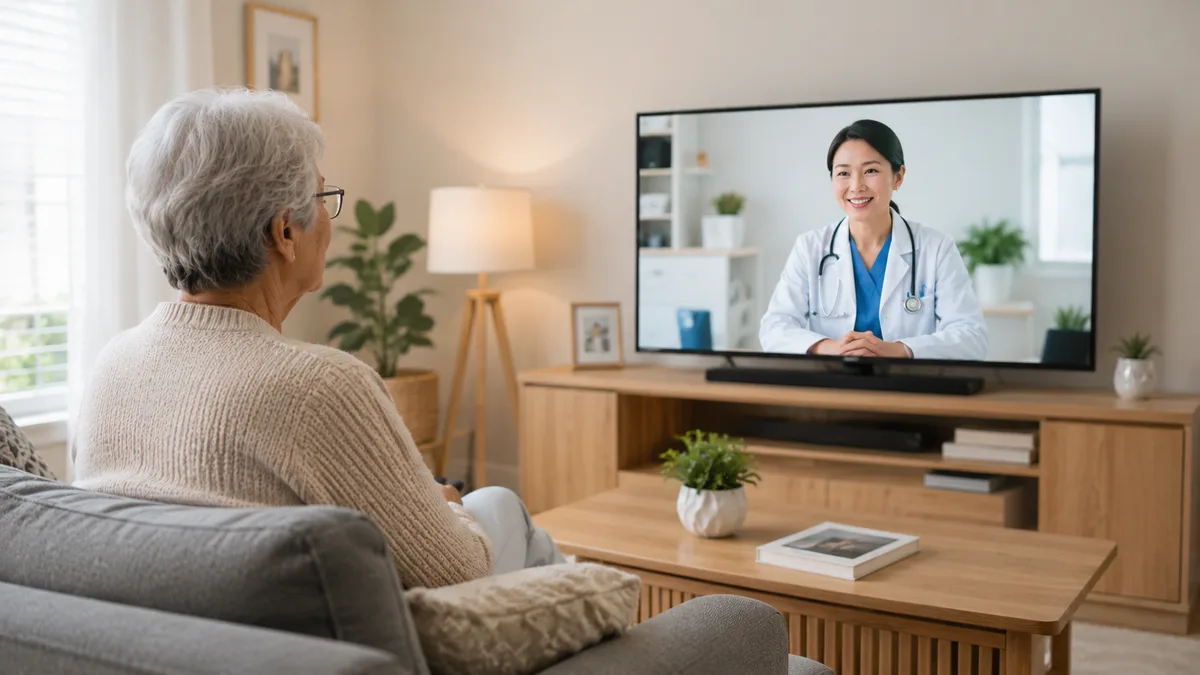
Television can provide a larger, familiar access point. Independa’s platform is publicly described as available on smart televisions and other devices. Agencies should test the actual patient experience, including the remote control and internet requirements.
Administrative controls matter
The platform should support role-based access, user provisioning, audit logs, content assignment, patient enrollment, consent records, and account closure.
Ask staff to demonstrate a complete case. Enroll a patient, assign education, schedule a video visit, correct an instruction, review activity, and discharge the account.
Measure the workflow first
Track enrollment, successful access, technical support, completed video sessions, assigned education, staff time, and unresolved issues. Clinical outcomes require appropriate methodology and should not be attributed to the platform without evidence.
Caregiver and family participation
Many home health patients depend on an unpaid caregiver for transportation, medication organization, meals, technology setup, and communication. The platform should support authorized caregiver participation without giving broader access than the patient permits.
Review how the agency records consent and changes access when circumstances change. Determine whether caregivers receive separate credentials and whether their activity is logged. Shared passwords weaken privacy and make audit records less useful.
Education can be directed to the patient, caregiver, or both. The assigned material should state who is expected to perform the task and when the agency should be contacted.
Integration with agency operations
A digital engagement tool should fit referral, admission, scheduling, clinical documentation, quality, and discharge processes. Leaders should identify which data must move between systems and which information staff will enter manually.
For each proposed integration, document the data fields, direction, timing, error handling, ownership, security, maintenance, and cost. A vendor statement that systems connect does not describe the operating work required.
If no integration is planned, the agency should estimate duplicate entry and reconciliation effort. That cost belongs in the purchasing decision.
Technical support in the home
Home deployments create support issues that differ from office software. Internet service, routers, television inputs, device pairing, power, passwords, and household changes can affect access.
The implementation plan should identify who installs equipment, who verifies connectivity, who trains the patient, and who handles failures. Support hours should match the times patients are expected to use the service.
Agencies should track the reasons for support calls. Repeated problems can indicate a design, training, hardware, or connectivity issue.
Procurement documentation
Require a written matrix that separates standard functions, optional modules, integrations, custom services, and roadmap items. The proposal should identify implementation tasks, recurring fees, support responsibilities, and any patient-facing hardware.
Ask for sample reports and administrative screens. Confirm whether agency leaders can export data and whether metric definitions are documented.
Questions for the buying team
Can the patient use the system without staff present? Can an authorized caregiver help without sharing credentials? Can clinicians see assigned education and completed interactions? Can the agency remove access at discharge? Can the vendor explain what happens during downtime?
The answers should be demonstrated in the proposed configuration.
A useful platform makes the care plan easier to support between visits. It gives patients a practical access point and gives clinicians a governed workflow. Home health leaders should evaluate both parts together.
About Independa
Founded in 2009 and headquartered in San Diego, Independa, Inc. develops technology designed to help older adults stay connected, engaged, informed, and supported across senior living communities and at home. At the center of the company’s offering is the Independa Health Hub®, a health, wellness, engagement, and care platform that can be accessed through familiar screens, including televisions, tablets, computers, and phones.
Independa’s approach centers on making digital health and engagement services easier to access for older adults, including those who may be less comfortable using traditional computers or mobile applications. Through the Independa Health Hub®, users can access services such as video communication, social connection, family communication, wellness resources, telehealth, and other health-related tools. The platform is HIPAA-compliant and is available through supported LG and Sony smart TVs, DISH Network set-top boxes, computers, and tablets.
For senior living organizations, Independa extends beyond resident-facing communication. Its platform supports a range of community and enterprise functions, including resident and family engagement, digital signage, community calendars, dining menus, surveys, broadcast messages, work orders, and information delivered directly through resident televisions. This gives operators a way to bring communication, engagement, wellness, and selected care services into a coordinated technology environment while reaching residents through screens they already know how to use.
Independa also serves organizations across home care, home health, remote care, and other healthcare delivery models. Its technology can support virtual interaction between older adults, caregivers, family members, and healthcare professionals, including access to telehealth services and remote healthcare engagement.
The company describes its mission in practical terms: making health, wellness, communication, and care easier to access without requiring older adults to adapt to an entirely new technology environment. By bringing services to the television and other familiar devices, Independa is designed to support aging in place, resident engagement, family connection, remote care, and the broader goal of helping older adults remain more independent and connected.
Frequently Asked Questions
What is home health patient engagement?
Home health patient engagement is the patient’s participation in information, decisions, education, communication, and assigned care activities during a home health episode.
What should a home health digital platform support?
Relevant capabilities may include patient education, secure video, reminders, monitoring connections, caregiver access, role-based administration, consent, reporting, security, and technical support.
Can home health visits be conducted by video?
Some skilled services may be supported through telehealth when permitted, clinically appropriate, and consistent with payer and regulatory requirements. The agency must maintain clinical accountability and documentation.
What is remote patient monitoring?
CMS defines RPM as a process in which a connected medical device automatically sends patient health data to a healthcare provider, who uses the information to treat or manage the patient’s condition.
Why is television access relevant to home health?
A television can provide a larger, familiar screen for education, communication, and approved remote services. The agency should test usability, privacy, connectivity, and support requirements.